Scrap metal is one of the most valuable materials in the commercial waste stream, and one of the most underoptimized. Most businesses treat scrap metal as a disposal problem — something to get rid of — rather than a revenue opportunity. The difference between a facility that's paying to haul away mixed scrap and a facility that's earning meaningful revenue from sorted, prepared metal is usually just knowledge and a small investment in process.
#The Fundamentals of Metal Value
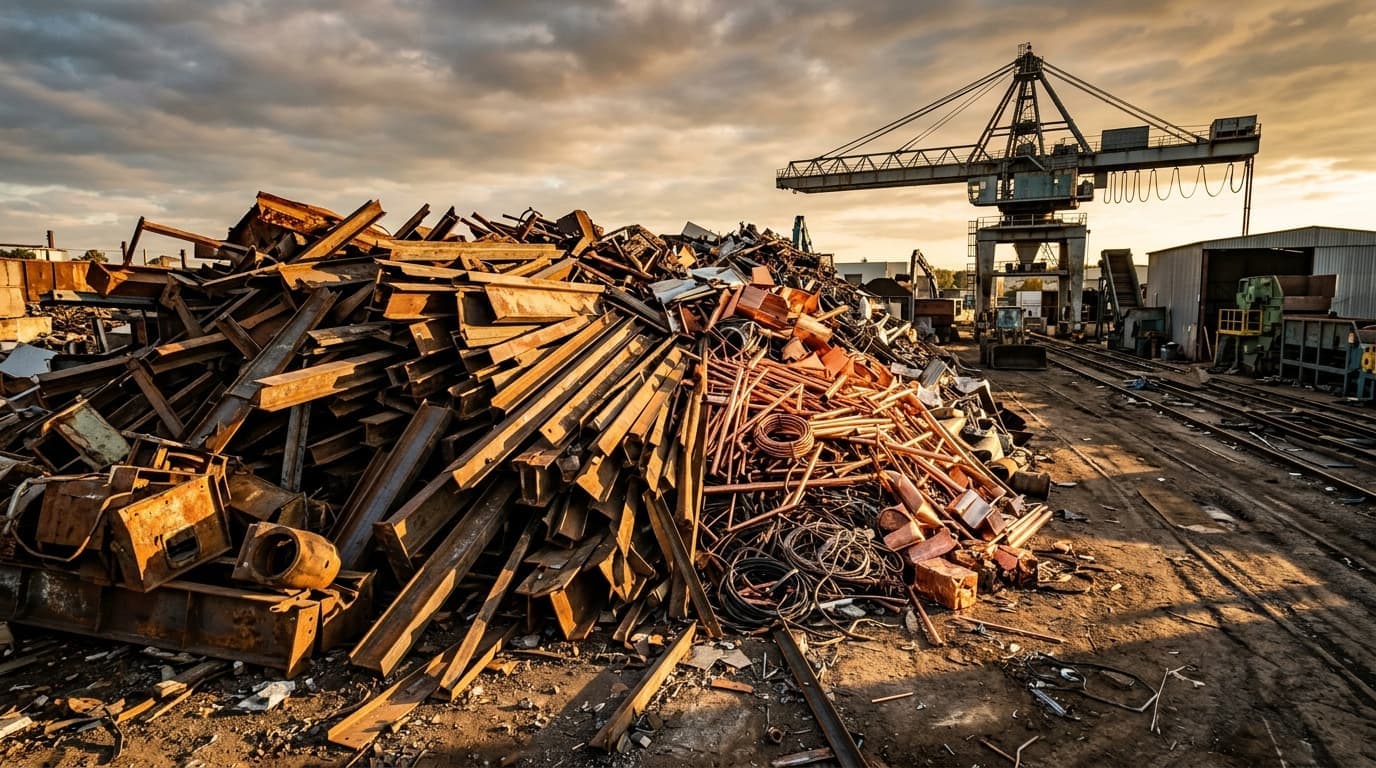
All scrap metal value starts with one question: is it ferrous or non-ferrous? Ferrous metals — steel, iron, stainless steel — contain iron and are attracted to magnets. They're priced per ton and represent the bulk of most commercial scrap streams by weight. Non-ferrous metals — copper, aluminum, brass, lead, zinc — don't contain iron, aren't magnetic, and are priced per pound at dramatically higher rates.
#Sorting for Maximum Value
The single highest-impact action you can take is sorting your metals before your recycler picks them up. A mixed load of steel, copper pipe, and aluminum conduit will be priced at or near the lowest-value component. The same materials, sorted into separate containers, can be worth 40–60% more. Basic sorting requires nothing more than separate bins, a magnet, and five minutes of training for your crew.
The difference between scrap as a cost center and scrap as a profit center is usually just three bins and a magnet.
#Preparing Metal for Pickup
After sorting, preparation is the next biggest lever on value. Clean metal — free of attachments, coatings, fluids, and non-metal contaminants — commands premium pricing. Strip insulation from copper wire. Remove rubber from aluminum wheels. Drain fluids from compressors and motors. Cut oversized pieces to fit standard containers. Each of these steps takes minutes and adds measurable value to your load.
#Why Scrap Metal Holds Its Value
Scrap isn't just waste with a salvage price — it's a feedstock that competes directly with virgin ore. Recycling metal uses dramatically less energy than mining and smelting new material: up to about 95% less for aluminum and roughly 60–74% less for steel. That energy gap is what gives scrap genuine, durable market value, and it's why a ton of metal kept in circulation matters for both your budget and your sustainability reporting.
#What a Fair Scrap Partner Looks Like
Pricing should never be a mystery. A reputable recycler ties your buy price to published commodity benchmarks like the LME and AMM, grades your material against recognized ISRI specifications, and weighs every load on certified scales with documentation you can keep. If you can't see how your number was calculated, that's a red flag.
- Certified, calibrated scales with a printed weight ticket per load
- Buy prices referenced to current LME/AMM benchmarks
- Clear ISRI grading of each material type
- Transparent documentation for your records and ESG reporting
Treated as a process rather than a chore, scrap metal turns from a hauling cost into a documented revenue stream. Our scrap metal recycling service handles sorting guidance, certified weighing, and transparent pricing for businesses across metro Atlanta.